Guide to Dayforce Talent
blog/guide-to-dayforce-talent | All Dayforce Insights
Last Updated: 2026-06-02
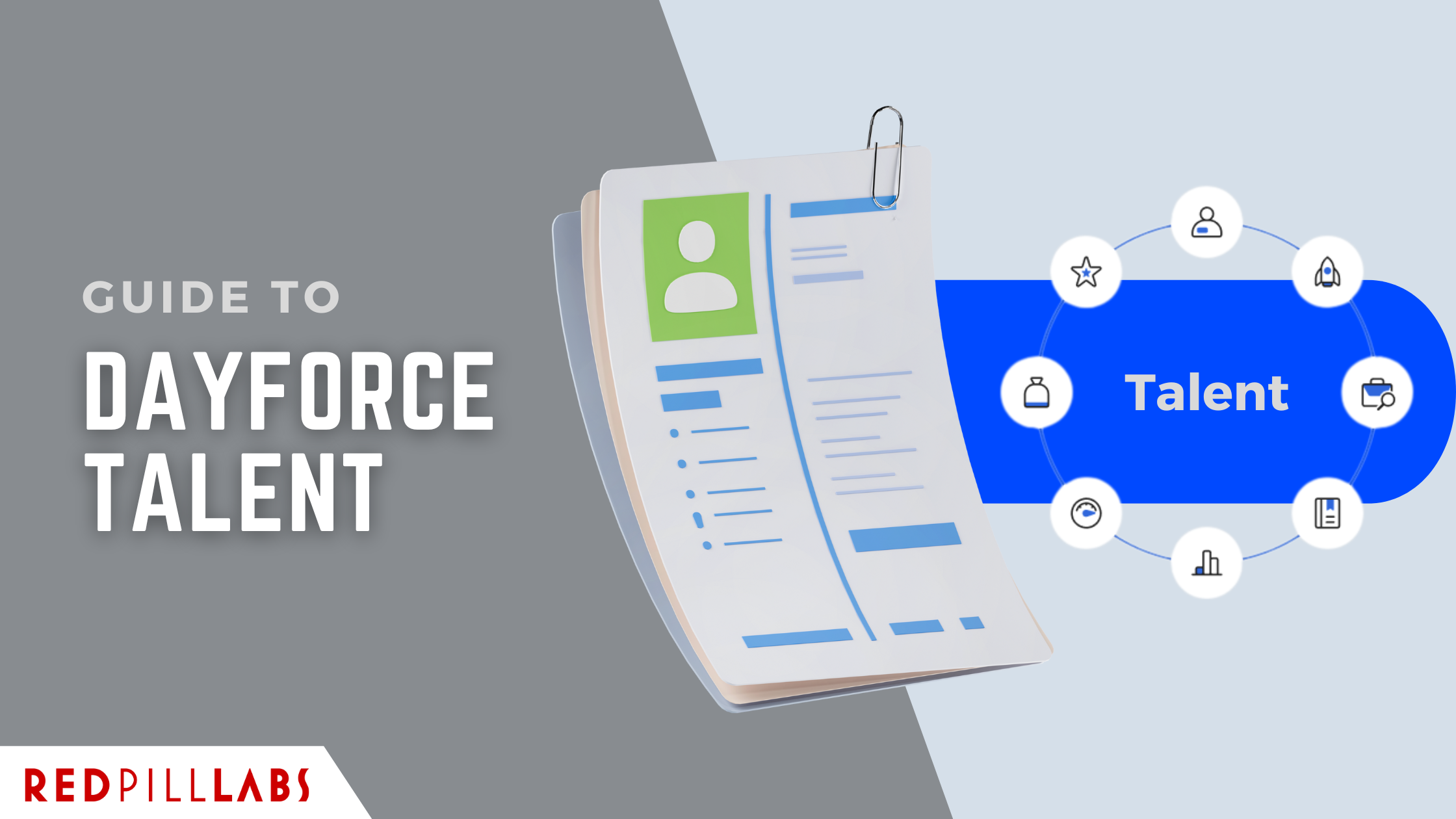
Dayforce Talent is designed to support the full employee lifecycle, from attracting candidates to developing, retaining, and planning your workforce.
When configured and used properly, it can significantly improve hiring outcomes, performance alignment, internal mobility, and long-term workforce planning.
When underutilized or misaligned with business processes, organizations may experience Talent as fragmented, manual, or disconnected from core HR and payroll data.
This guide explains what the Dayforce Talent module includes, how organizations typically use it, where challenges arise, and how to get the most value from it.
Learn how we optimize your Dayforce modules here.
Why Talent, Why Now
Three forces are driving demand for consolidated talent platforms in 2026:

(1) Fragmentation.
Most organizations have accumulated point solutions; one tool for recruiting, another for performance, another for learning; creating disconnected data, duplicate administration, and a fractured employee experience.
(2) Consolidation pressure.
According to the 2023 Gartner THR Technology Priorities Survey, 26% of HR leaders said they were fully consolidated around a cloud HCM suite.
By the 2025 Gartner Q1 CHRO Survey, that number had risen to 34%; an 8-point shift in two years.
Organizations are actively looking to reduce total cost of ownership by pulling talent tools into their core HCM.
(3) Talent intelligence.
The emergence of AI-powered skills engines, career pathing tools, and predictive analytics means talent data is no longer just historical record-keeping but a decision-making infrastructure when unified in a single platform.
What is the Dayforce Talent Module?
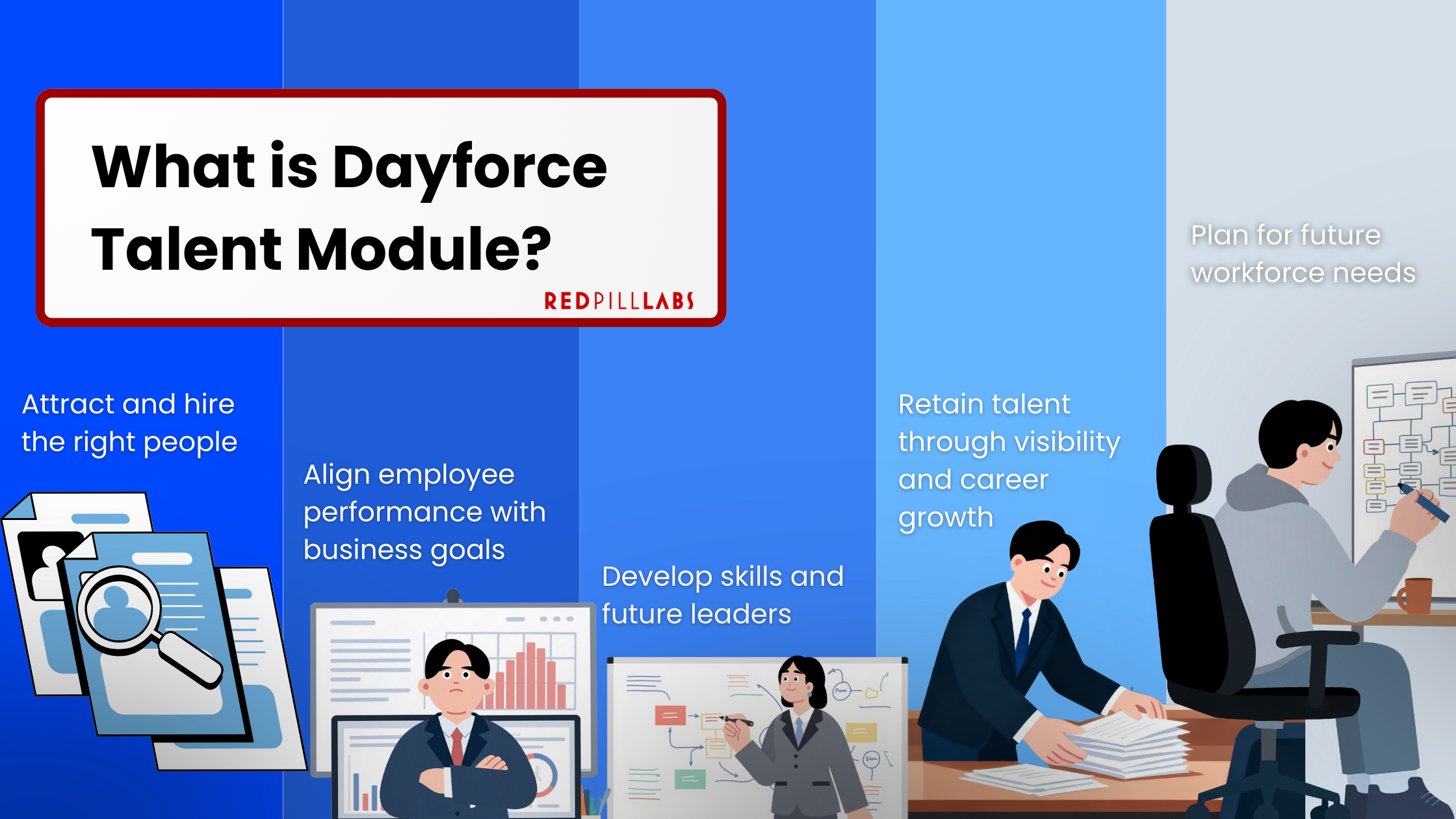
The Dayforce Talent module is a collection of tightly integrated tools that support talent acquisition, performance management, learning, succession planning, and career development.
Its core advantage lies in being natively connected to Dayforce HCM, payroll, workforce management, and reporting, allowing talent decisions to be driven by real workforce data rather than disconnected systems.
At a high level, the module helps organizations:
Attract and hire the right people
Align employee performance with business goals
Develop skills and future leaders
Retain talent through visibility and career growth
Plan for future workforce needs
What's Included in Dayforce Talent?
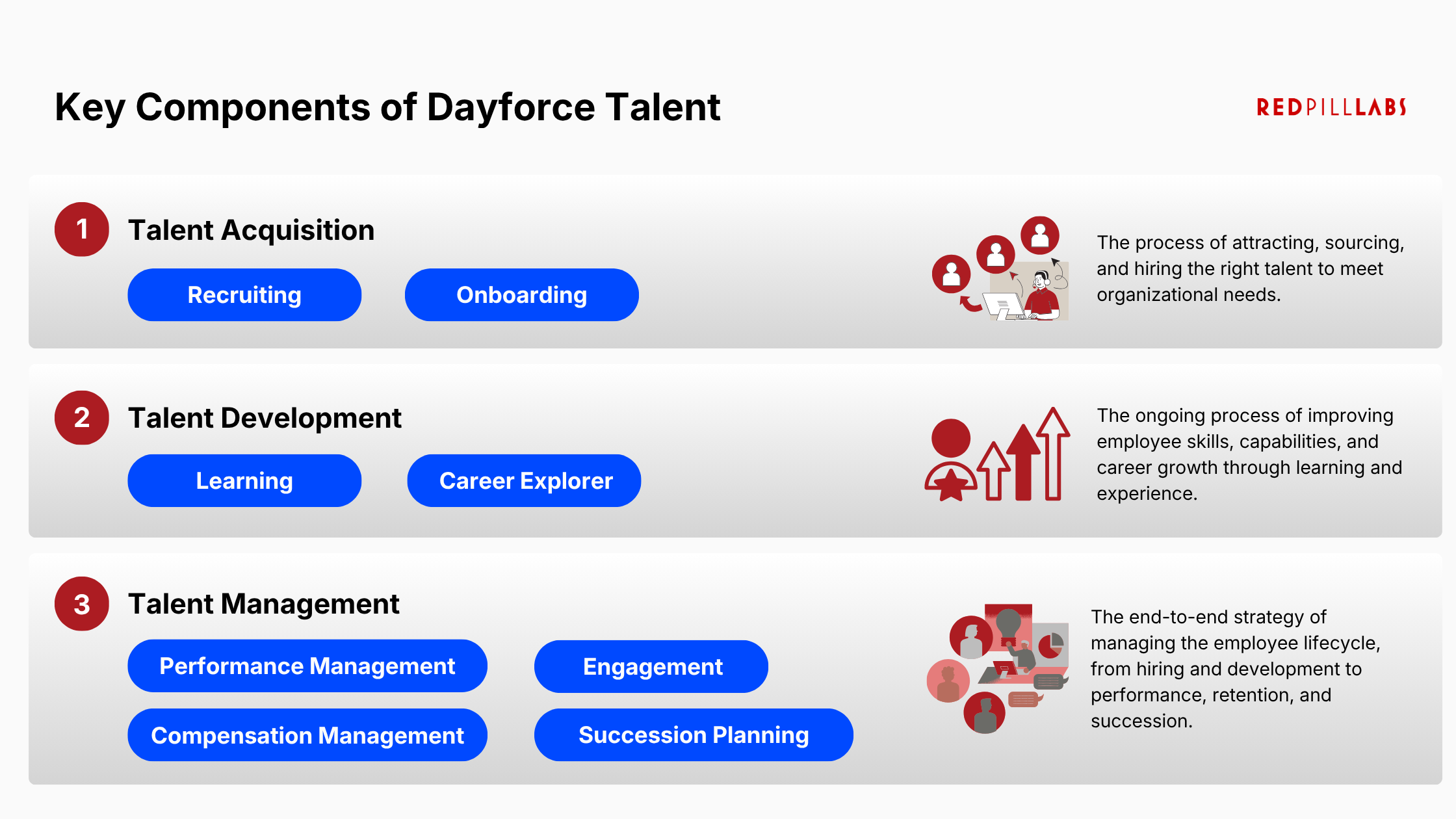
Dayforce Talent is organized into three categories: Talent Acquisition, Talent Development, and Talent Management.
Each contains specific modules that can be purchased individually or as part of bundled packages.
(1) Talent Acquisition
Recruiting
Dayforce Recruiting supports end-to-end hiring from job requisition through offer management.
Key capabilities include:
Job posting to internal and external boards
AI-assisted candidate screening and matching based on skills and role requirements
Configurable application workflows and interview scheduling
Offer management and approvals
Direct integration with onboarding and employee records, eliminating duplicate data entry
AI-generated job descriptions via Dayforce AI Assistant
Because recruiting data flows natively into Dayforce HR and payroll, organizations gain continuity from candidate to employee without re-keying data or relying on integrations.
According to Dayforce, AI in recruiting is the top HR function where organizations are deploying it, with 51% reporting current use per SHRM's 2025 Talent Trends report.
Onboarding
Onboarding in Dayforce extends directly from the recruiting workflow.
Candidate information, role requirements, and hiring context stay attached to a single employee record, so new hires can begin meaningful work on day one rather than waiting for systems to sync.
Onboarding tasks, document completion, and learning assignments can all be initiated within the same environment.
(2) Talent Development
Learning
Dayforce Learning functions as both a Learning Management System (LMS) and a Learning Experience Platform (LXP).
This is a meaningful distinction from older LMS-only configurations. The combined approach provides:
Compliance training management and certification tracking
Course catalogs with learning assignments and completion tracking
AI-driven learning recommendations based on employee skills and career goals
An intuitive, mobile-first interface designed to engage learners
A comprehensive content library (the "Content" add-on) that dramatically expands available training material
AI-powered course creation tools to help organizations build proprietary content faster
Career Explorer
Career Explorer is Dayforce's AI-powered career pathing and internal mobility tool. It uses machine learning, a standards-based skills inventory, and internal talent data to help employees understand where they can go within the organization and what skills they need to get there.
Key capabilities include:
Skills gap identification: Employees and managers can see exactly which skills are required for target roles and where gaps exist
Personalized career path recommendations: AI matches employees to internal opportunities based on their profile, skills, and interests
Mentorship matching: Employees can be paired with mentors based on skill alignment
Skill endorsements: Managers can formally recognize employee skill development
Internal role matching: Open opportunities are surfaced to employees based on their talent profile, supporting internal mobility before external recruiting
Succession support: Career Explorer helps identify internal candidates ready for promotion, feeding directly into succession planning workflows
For organizations struggling with retention, Career Explorer provides employees visibility into a future within the company.
(3) Talent Management
Performance Management
Dayforce Performance Management supports goal setting, continuous feedback, development planning, and formal reviews within a single workflow.
Rather than annual reviews alone, the module is designed to support an ongoing performance conversation between employees and managers.
Core capabilities include:
Goal alignment at individual, team, and organizational levels
Continuous feedback and check-in tools
Configurable review forms and cycles
Development plan creation linked to skills and career goals
Integration with compensation decisions (see Compensation below)
A common implementation pitfall: organizations over-engineer review forms in an attempt to capture everything, which drives down manager and employee adoption.
Simpler review designs consistently outperform complex ones.
Compensation Management
Compensation is the deal-size multiplier in Performance sales, just as Content is in Learning.
Compensation Management allows organizations to:
Run merit, bonus, and equity cycles with configurable rules and workflows
Make pay decisions informed by performance ratings, market benchmarks, and employee history — all within the same platform
Reduce manual spreadsheet cycles and approval bottlenecks
Automatically reflect approved compensation changes in payroll without re-entry
The integration between Compensation and Payroll is one of Dayforce's most operationally significant advantages: changes made in a comp cycle flow to payroll in real time without a separate data feed.
Engagement
Dayforce Engagement provides employee survey tooling, including pulse surveys and broader engagement assessments.
Key capabilities include:
Configurable survey design and distribution
Sentiment analysis on open-text responses
DEI measurement and gap identification
Manager and leadership dashboards with actionable insights
AI-enhanced analysis to surface patterns that manual review would miss
Engagement data in Dayforce connects directly to talent decisions, allowing organizations to be able to correlate engagement trends with performance data, turnover risk, and compensation equity within the same platform.
Succession Planning
Dayforce Succession Planning helps organizations identify critical roles, assess readiness, and build talent pipelines for the future.
It moves organizations from reactive replacement planning to proactive bench development.
Key capabilities include:
Talent pools: Group employees by readiness level, potential, and interest for specific roles or role families
Talent matrices (9-box): Visually compare employee performance against potential to identify successors
Flight risk analytics: Identify employees at elevated attrition risk as part of succession prioritization
Coverage benchmarking: Assess the overall strength of the succession plan across the organization
Integration with compensation, performance, and career data: Succession decisions are made with full context, not just manager intuition
One of the most common underutilization patterns: organizations treat succession as an executive-only exercise rather than embedding it across management layers. Dayforce's tooling supports much broader deployment.
Read More: Dayforce Position Management
A look at the key benefits, features, and use cases of Position Management; as well as a “Set-Up” Guide.
The Talent Intelligence Layer: AI and Skills
Across all modules, Dayforce Talent is unified by a skills engine and an AI layer that adds intelligence to individual transactions.
Dayforce Skills Engine
The skills engine maintains a standards-based, AI-enhanced skills inventory that is shared across Recruiting, Career Explorer, Learning, Performance, and Succession.
Rather than maintaining siloed skill lists in each tool, a single skills profile per employee powers recommendations, matching, and gap analysis across the entire talent lifecycle.
This is architecturally significant: it means a skill validated during a performance review can surface a learning recommendation, which can feed a succession plan, which can inform a hiring decision without manual reconciliation.
Dayforce AI Assistant and AI Agents
Dayforce AI Assistant is embedded across the platform and handles tasks including:
Drafting job descriptions and posting templates
Summarizing employee performance and development history
Answering HR questions on pay, policy, and benefits based on configured data
Generating compensation guidance and review summaries
Dayforce AI Agents extend this by taking action, not just providing answers, within configured workflows.
HR teams are under increasing pressure to drive productivity, and AI Agents represent the operational manifestation of that requirement within Dayforce.
Benefits of Using Dayforce Talent
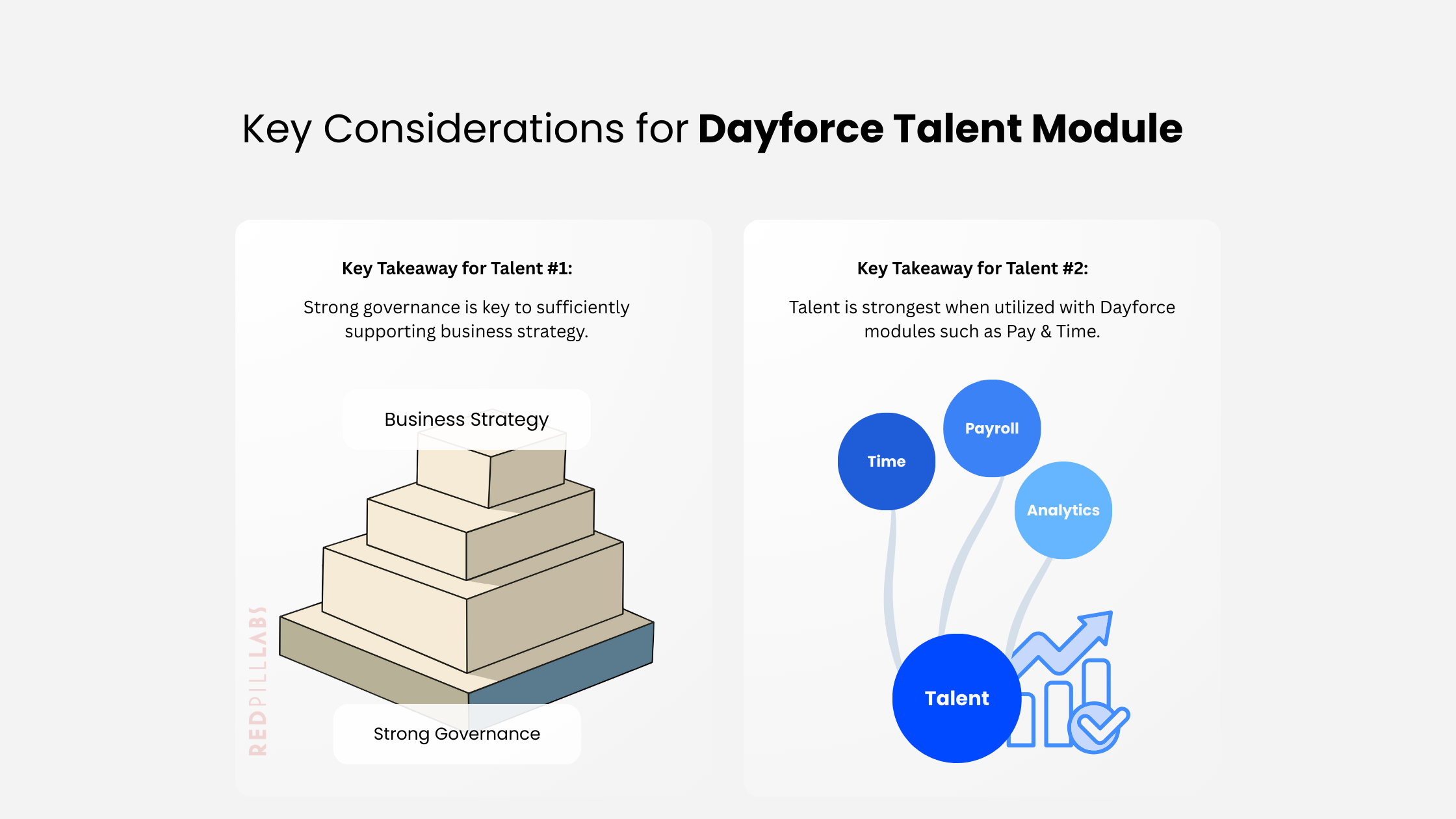
When the Talent module is aligned with business strategy and supported by strong governance, organizations typically see:
Reduced manual processes and duplicate systems
Improved hiring quality and speed
Better alignment between performance, pay, and outcomes
Increased visibility into workforce capabilities and gaps
Stronger retention through internal growth opportunities
The real value comes from integration.
Talent data is most powerful when connected to scheduling, time, payroll, and analytics.
Common Challenges and Pitfalls in Dayforce Talent
Several issues consistently appear across Dayforce Talent implementations:
Treating Talent as a standalone module rather than part of the HCM ecosystem
Over-configuring workflows and forms before processes are clearly defined
Inconsistent data structures for jobs, positions, and competencies
Low manager adoption due to lack of training or unclear expectations
Reporting challenges caused by poor foundational setup
Addressing these issues often requires revisiting design decisions rather than adding more configuration.
Best Practices for Success
Strong Dayforce Talent implementations share a few common traits:
Clear ownership of talent processes across HR, leadership, and operations
Simple, repeatable workflows aligned to real-world practices
Phased rollouts that prioritize high-impact functionality first
Regular review of configuration as the organization evolves
Reporting and analytics built into the design from the start
Success depends as much on process and change management as it does on technology.
When to Reassess Your Dayforce Talent Setup
It may be time to reassess your Talent module if:
Managers are avoiding or bypassing the system
Recruiting and onboarding feel disconnected
Performance reviews feel burdensome or low-value
Succession planning is manual or rarely updated
Reporting requires heavy workarounds
A structured review can uncover configuration gaps, process misalignment, and opportunities to better leverage existing functionality.
Read More: 6 Tips for Maintaining Your Dayforce Environment
Key Takeaways
The Dayforce Talent module works best when it’s integrated, easy to use, and aligned with how your organization actually runs.
When those pieces are in place, it can meaningfully improve workforce performance and growth.
Organizations that take a thoughtful, business-first approach to design and governance consistently achieve stronger adoption and better outcomes than those that treat Talent as a checkbox module.