Why Consistent System Audits Matter for Long-Term Stability
blog/why-consistent-system-audits-matter-for-long-term-stability
2025-01-15
Most organizations think of system audits as something you do when there is a problem.
A payroll issue, a reporting discrepancy, a failed integration, or mounting user frustration usually triggers the conversation.
When system audits only occur as part of “damage control”, this is what is called a reactive audit.
Consistent system audits take a very different approach.
Organizations who consistently audit their systems and related processes treat systems as living parts of the business that evolve alongside their people, processes, regulations, and technology.
This mindset is what separates stable systems from fragile ones.
Long term stability rarely comes from one-time implementations or occasional cleanups.
It comes from regularly revisiting how systems are configured, how they are being used, and whether they still support how the business actually operates today.
Systems Change Even When You Do Nothing
Stability does not come from leaving systems alone. Most change happens gradually through everyday use.
Common sources of system drift include:
Vendor updates that introduce new features, defaults, or behaviors
Regulatory or compliance changes that require quick configuration adjustments
Business growth, restructuring, or cost pressures that alter workflows
New users bringing different habits and expectations
Temporary workarounds that quietly become standard practice
Over time, these small changes stack up.
The system becomes more complex, less efficient, and harder to trust.
Regular audits create a deliberate pause.
They give teams a chance to understand how the system has evolved, what no longer fits the business, and what should be simplified or corrected before real issues surface.
Core Elements of a System Audit
A proper system audit is not just a technical checklist.
It is a structured review of alignment.
The goal is to understand whether the system, the processes, and the people using it are still moving in the same direction.
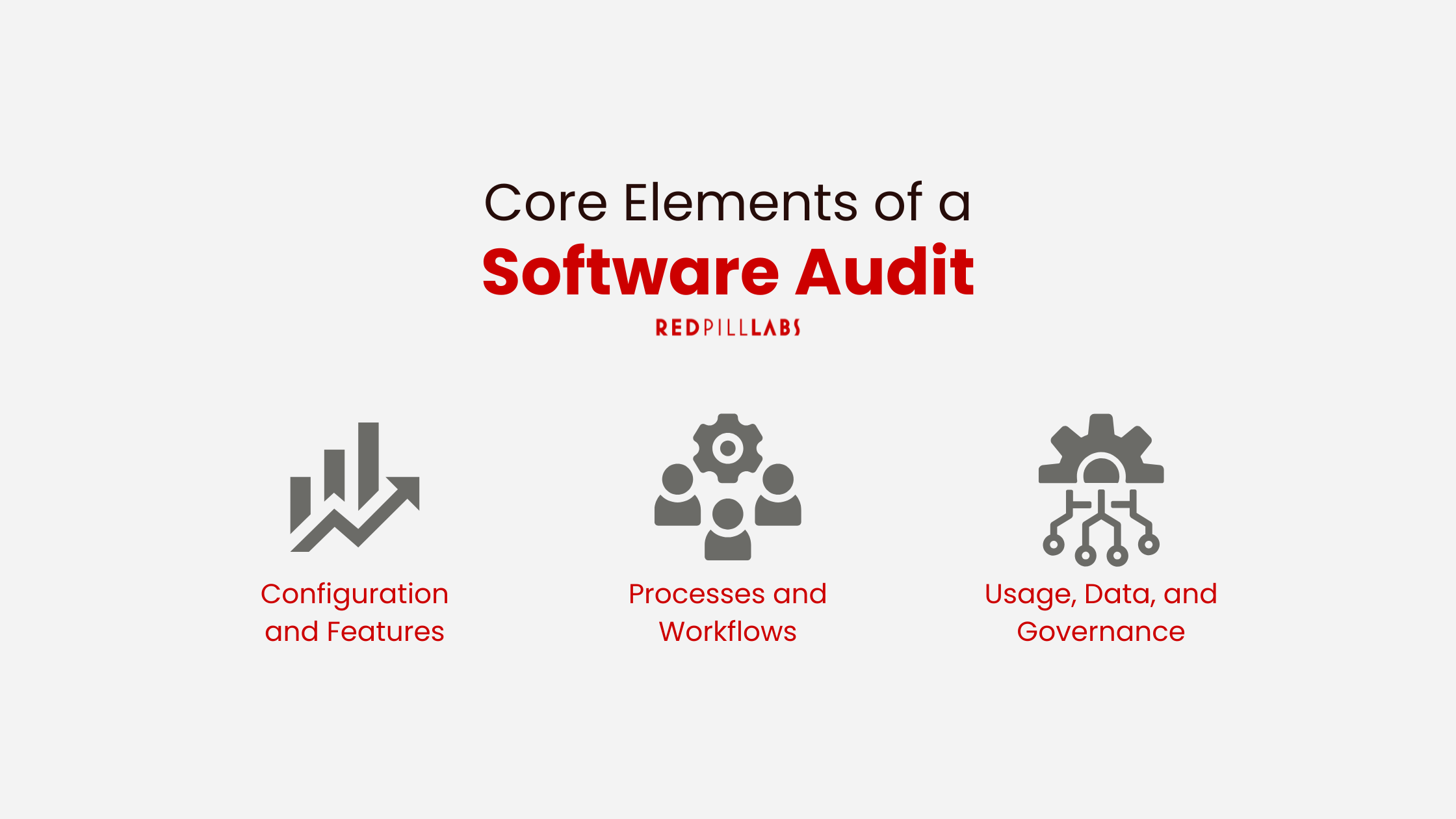
A strong audit typically covers three core areas.
1. Configuration and Features
Systems evolve quickly. New features are released, existing ones change, and some functionality becomes outdated.
An audit should assess:
Which features are enabled but unused
Which features are heavily relied on but no longer fit current needs
Whether new functionality could replace manual work or custom solutions
Whether legacy configurations are still required or simply tolerated
Ignoring this layer often results in unnecessary complexity or missed opportunities to simplify.
2. Processes and Workflows
Processes rarely stay static. Teams adapt, roles shift, and exceptions become common.
Auditing processes means:
Mapping how work is actually done today, not how it was designed
Identifying manual steps that exist only because “that’s how it’s always been”
Spotting approvals, handoffs, or validations that no longer add value
Understanding where users rely on spreadsheets, email, or side systems
When systems and processes drift apart, users compensate. That compensation is usually where errors and inefficiencies are introduced.
3. Usage, Data, and Governance
Even well-designed systems can become unstable through inconsistent use.
This part of the audit focuses on:
Data quality and consistency
Permission structures and role clarity
Reporting accuracy and trust
Whether ownership and accountability are clearly defined
Without governance, systems slowly lose reliability. Once trust erodes, teams stop using the system as a source of truth.
What are the Risks of Neglecting System Audits
Organizations that do not audit their systems consistently tend to experience the same long-term issues.
Problems surface late, often during high-stress moments, leading to risks such as the following:
Fixes become more expensive due to multiple issues being tangled together.
Internal teams struggle to explain why things work the way they do
Decisions are delayed because leaders don’t fully trust the data.
Most of this risk is avoidable.
Regular audits can catch misalignment early, while changes are still manageable.
Key Takeaway
The goal of consistent system audits is not to constantly change things.
It is to ensure that change happens intentionally.
Stable systems are not static.
They are reviewed, adjusted, and reinforced over time.
Audits create space for reflection and correction before small issues turn into structural problems.
Organizations that build audits into their operating rhythm spend less time firefighting and more time improving.
Over the long term, that discipline is what keeps systems reliable, trusted, and aligned with the business.