How Your Technology Plays a Crucial Role in Driving Productivity
blog/how-your-technology-plays-a-crucial-role-in-driving-productivity
2026-04-02

Hiring isn’t the only way to grow.
When teams feel stretched thin, organizations often assume that they need more people.
In reality, in many instance its the work itself that’s the problem.
When companies have systems or processes in place with too many steps or too many gaps, it can result in employees working harder than necessary just to keep things moving.
Before increasing headcount, consider how your technology plays a negative role in productivity and burnout.
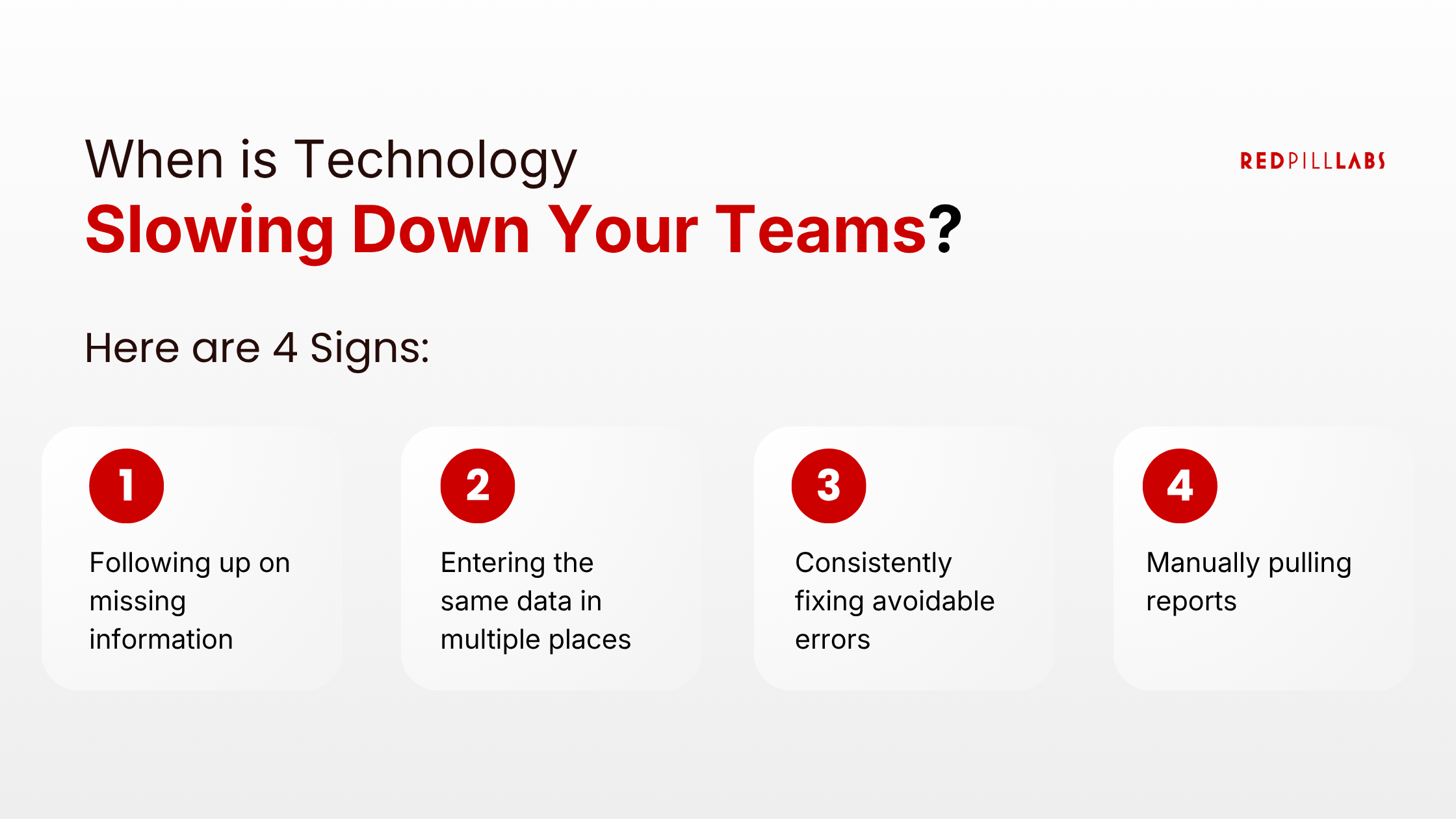
When is Technology Slowing Down Your Teams?
When employees spend a large chunk of their time on avoidable tasks, technology isn’t improving their productivity but instead hindering it.
This includes tasks such as:
entering the same data in multiple systems
fixing avoidable errors
following up on missing information
manually pulling reports
In many cases, these issues are not caused by a lack of tools, but by how those tools are set up and used.
Why Adding More Tools or People Doesn’t Fix It
When work starts to slow down, organizations often respond by adding more tools or hiring more people.
If the underlying process is inefficient, neither approach solves the problem.
Adding more tools:
creates more systems where work needs to be completed
increases duplicate data entry
makes it harder to maintain consistent information
Adding more people:
increases the number of handoffs
requires more coordination
continues the same manual processes at a larger scale
In both cases, the amount of work increases, but the process itself does not improve.
Without fixing how the work flows, adding more tools or more people usually adds complexity rather than efficiency.
What to Do Instead
Improving productivity starts with how the work is set up.
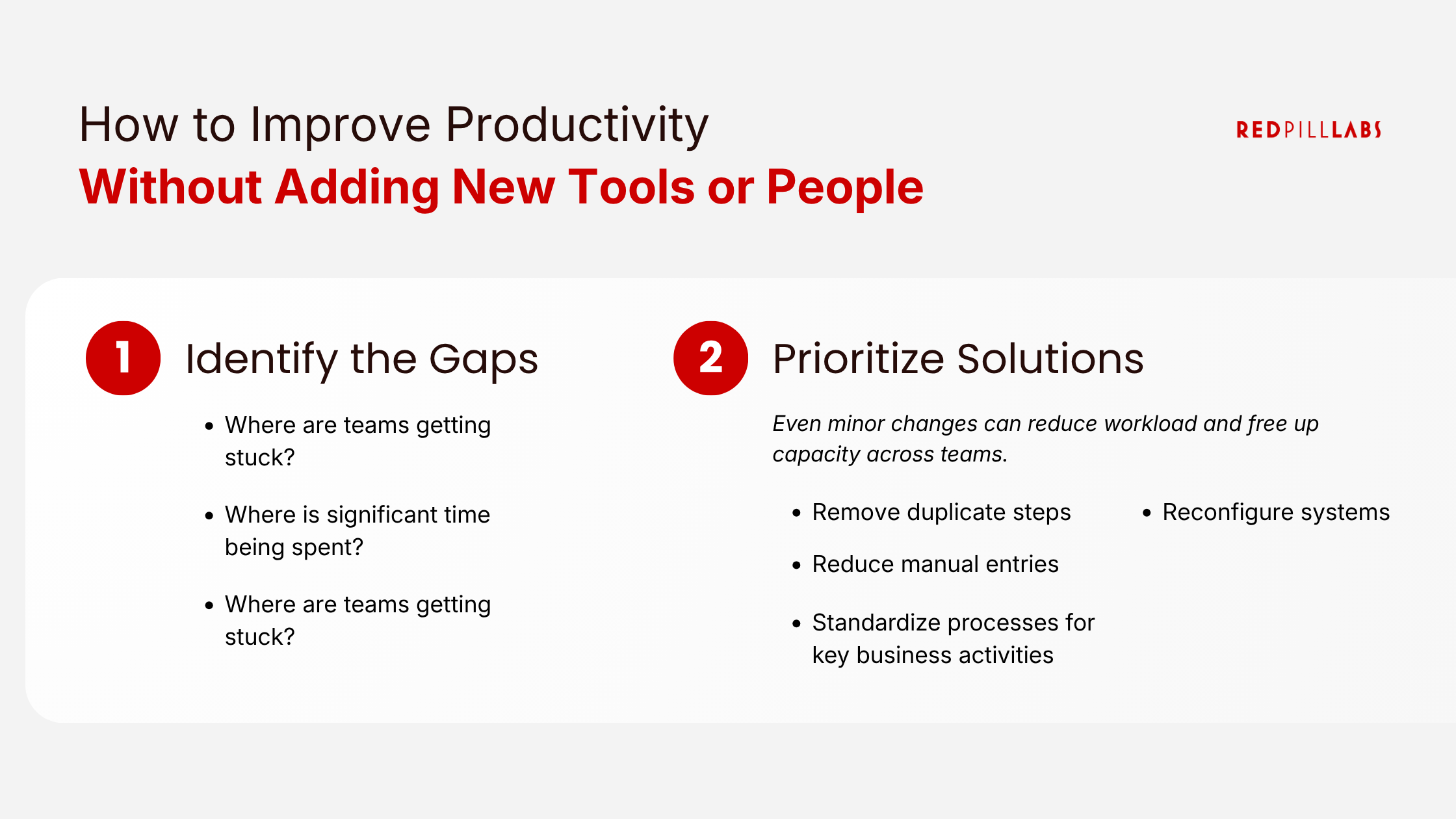
Before adding new tools or hiring, look at where time is being spent and where work is getting stuck.
Focus on:
removing duplicate steps
reducing manual data entry
standardizing how tasks are completed
connecting systems where it actually matters
The goal is to make work move from one step to the next without constant manual input.
In most cases, this does not require replacing everything.
It just involves adjusting how current systems are configured and how processes are structured.
Small changes in these areas can reduce workload, improve accuracy, and free up capacity across the team.
Key Takeaways
Hiring is not always the solution to growth or capacity issues
Inefficiencies are often caused by how work is structured, not by a lack of effort
Technology can slow teams down when systems are not set up to work together
Adding more tools or people increases complexity if the underlying process is not fixed
Improving how work flows can increase capacity without increasing headcount