Guide to Visier Workforce Intelligence
Visier is a leading workforce intelligence platform that helps organizations turn complex people data into clear, actionable business insights.
One of its key capabilities, and the focus of this guide, is Visier’s Workforce Intelligence capabilities.
Visier positions Workforce Intelligence as the evolution of traditional people analytics.
Combining workforce data, business context, analytics, AI, and workforce planning; Visier helps organizations move from simple post-incident reporting to reporting on what is happening, what may happen next, and what organizations can do about it.
What Is Visier Workforce Intelligence?
Visier Workforce Intelligence is an intelligence layer designed to help organizations understand their workforce and connect people decisions to business outcomes.

Rather than treating HR data as a collection of separate reports, Visier brings people data and operational context together into a centralized environment.
The People Data Platform provides the underlying data, analytics, AI, and security capabilities that support Workforce Intelligence.
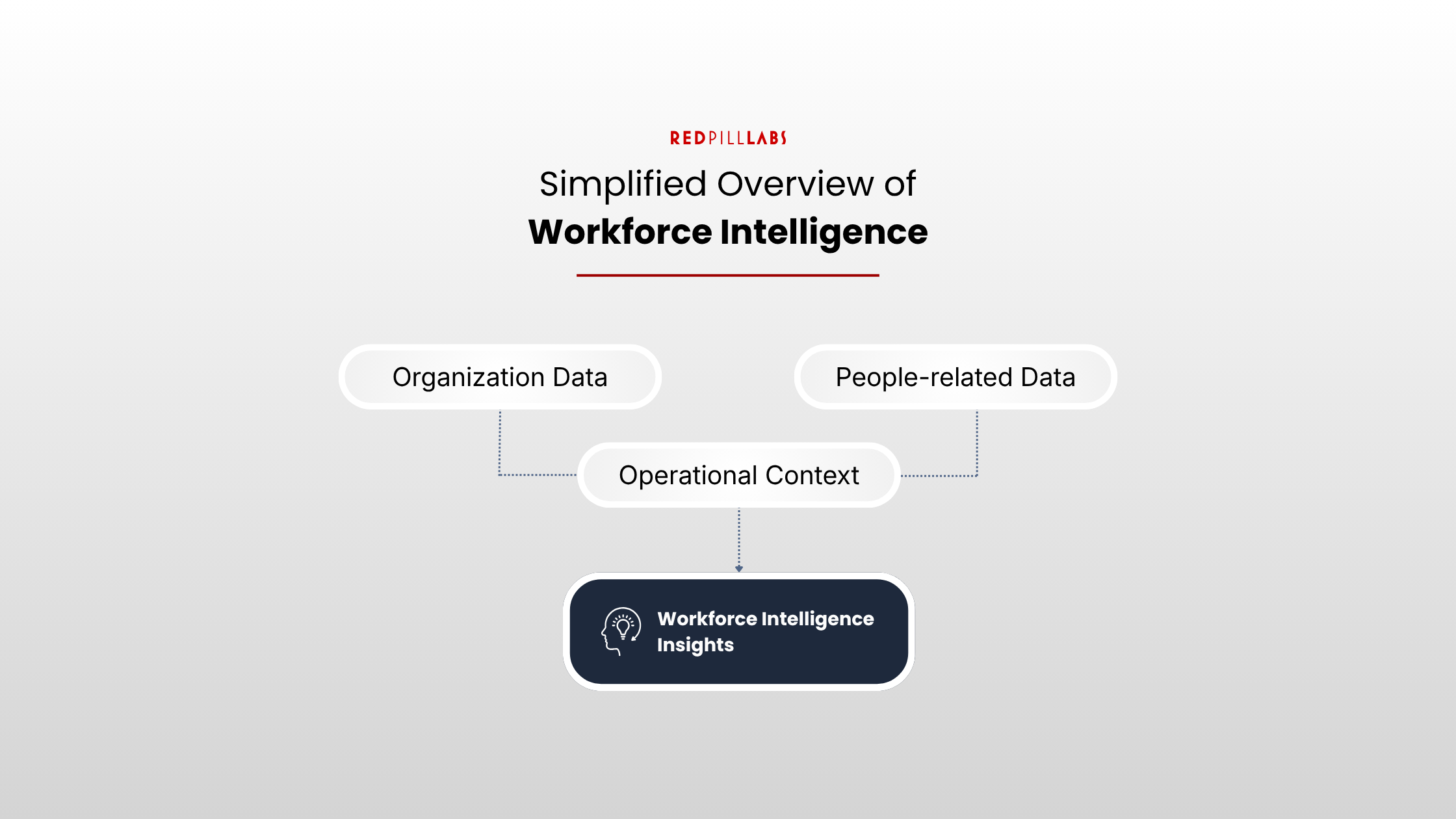
Visier Workforce Intelligence help leaders answer questions such as:
Where are we experiencing the highest levels of employee turnover?
Which employees, roles, or teams may be at risk?
Where do we have critical skills gaps?
Are we building the workforce we will need in the future?
What would happen if we changed our hiring strategy?
Where are compensation or workforce costs creating challenges?
How could organizational changes affect headcount, skills, cost, or performance?
What actions should managers and HR leaders take based on the data?
While a conventional report may tell an organization that turnover increased, Workforce Intelligence is intended to help leaders understand:
Where the increase is occurring;
What factors may be contributing to it;
Who or what is affected; and
What decisions could be made in response?
How Does Visier Unify Workforce Data?
One of the biggest challenges with people analytics is fragmented data.
Recruiting information may sit in your organization’s applicant tracking system.
Employee information might live in the HRIS / HCM, while compensation data may be maintained separately.
And learning and performance information can exist in other applications, while engagement data may come from surveys from another external software.

Visier's approach is to consolidate fragmented sources into a consistent workforce data layer.
Its Real-time People Data Platform combines people data, work data, analytics, AI, and security to create what Visier describes as an always-ready foundation for workforce intelligence.
This matters because workforce decisions often require information from multiple areas simultaneously.
For example, understanding retention risk might require looking at:
Employee → Role → Manager → Compensation → Performance → Tenure → Career Mobility → Organizational Structure
Instead of analyzing each factor independently, Workforce Intelligence can provide a broader view of the relationships between them.
What Business Problems Can Visier Workforce Intelligence Help Solve?

Here are a few examples of how Visier empowers organizations to become more proactive.
Retention
Identify where turnover is concentrated and investigate potential drivers of employee attrition.
Workforce Planning
Understand the workforce required to support future business strategies and evaluate different scenarios.
Skills Gaps
Identify where existing workforce capabilities may not align with future business requirements.
Internal Mobility
Understand where employees may be able to move into new roles or develop capabilities needed elsewhere in the organization.
Organizational Design
Evaluate organizational structures using workforce data rather than relying exclusively on static organizational charts.
Workforce Costs
Connect workforce decisions with cost implications to help HR and Finance evaluate tradeoffs.
Manager Effectiveness
Give managers greater visibility into workforce trends and factors affecting their teams.
Workforce Transformation
Help organizations understand how changes such as AI adoption, restructuring, expansion, or cost reduction could affect their people and capabilities.
Workforce Intelligence vs. Traditional HR Reporting
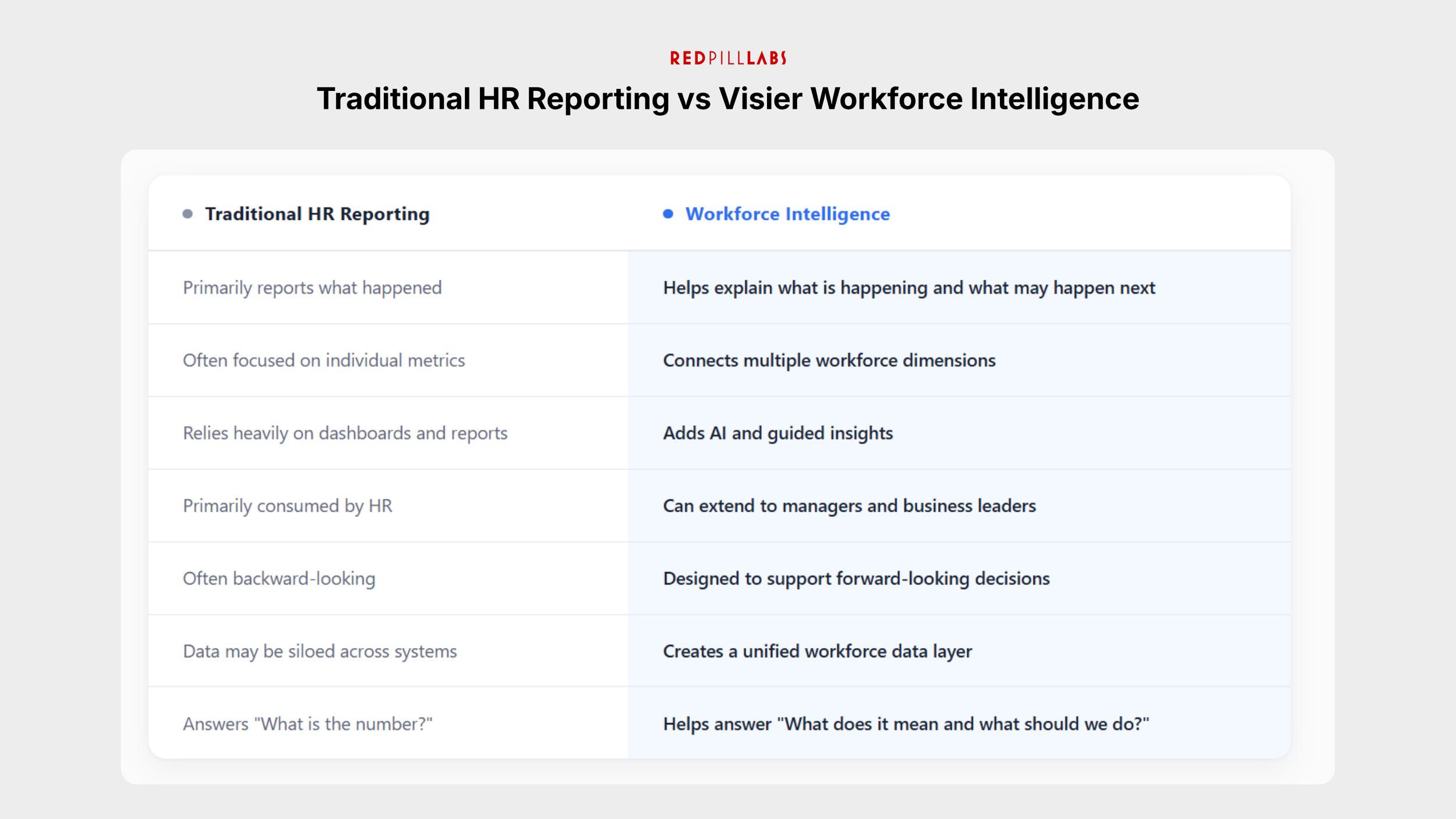
The distinction between Visier Workforce Intelligence and traditional HR reporting is not that traditional reporting is obsolete.
Organizations still need accurate reporting and historical workforce metrics.
The difference is what happens after the report is produced.
Workforce Intelligence attempts to shorten the distance between workforce data, insight, and action.
Key Takeaway
Traditional HR analytics largely focused on understanding the past: headcount, turnover, hiring, compensation, performance, and other historical metrics.
Workforce Intelligence expands that role by combining
workforce data
contextual analytics
AI, and
planning capabilities
With Visier, organizations can better understand the workforce they have, identify emerging risks and opportunities, and make better decisions about the workforce they need.
For organizations navigating skills shortages, retention challenges, AI-driven transformation, cost pressures, or organizational change, Workforce Intelligence can provide a foundation for moving from reactive workforce reporting to proactive workforce decision-making.
Learn more about Visier here.