3 Reasons Workforce Insights Matter More Than Ever
blog/3-reasons-workforce-insights-matter-more-than-ever
2026-10-16

Organizations collect enormous amounts of workforce data across HR, payroll, recruiting, performance, compensation, time and attendance, and other systems.
Yet having access to data does not necessarily mean having the information needed to make better workforce decisions.
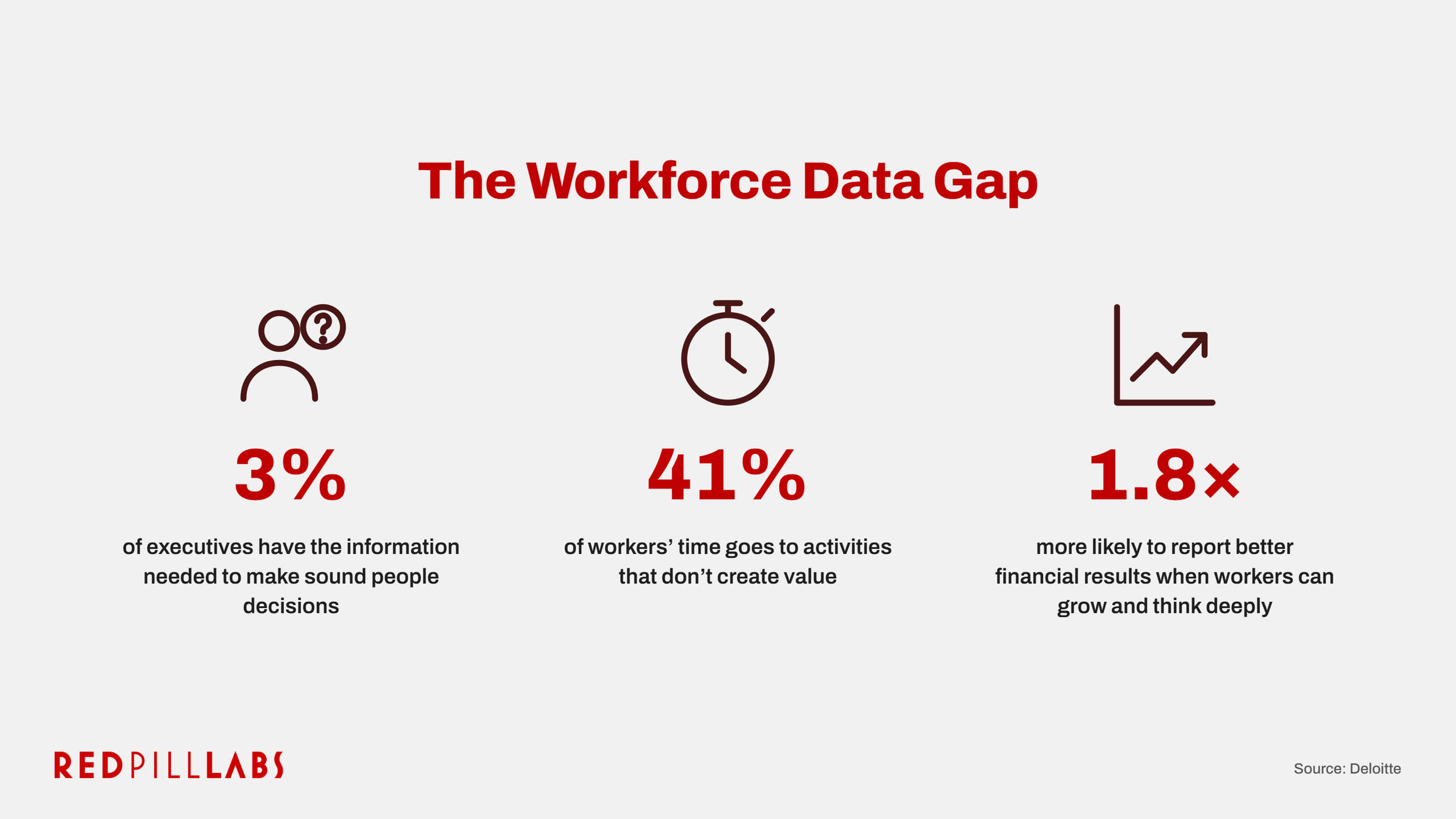
Only 3% of executives surveyed by Deloitte said they had the information needed to make sound people decisions.
That same research also found that 41% of workers' time is spent on activities that do not contribute to the value their organization creates, highlighting the gap between measuring work and understanding where workforce capacity is actually being used.
At the same time, organizations that are better at enabling workers to grow, think deeply, and use their imagination are 1.8 times more likely to report better financial results.
The data points to a simple distinction:
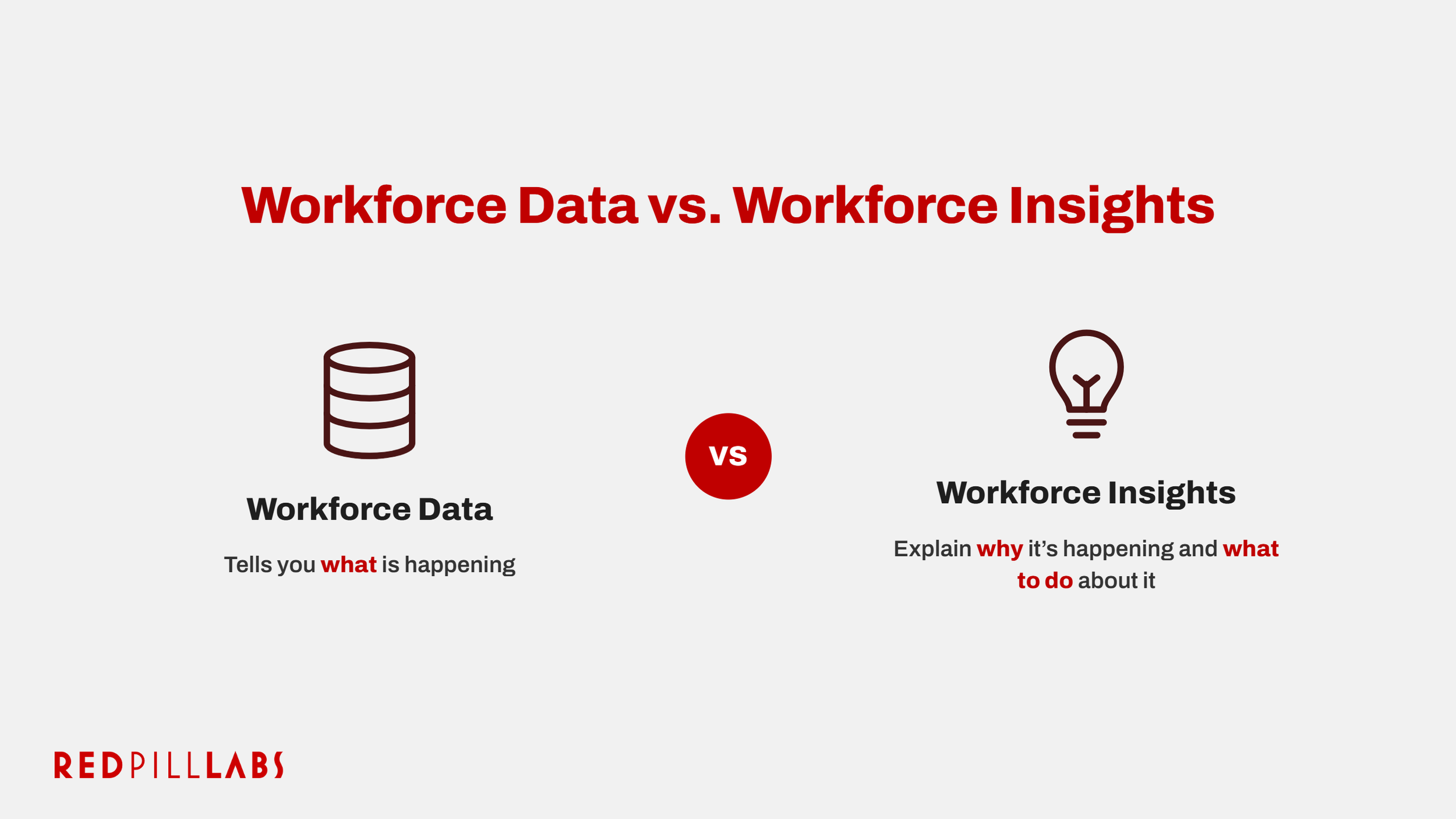
While workforce data tells you what is happening, Workforce insights help you understand why it is happening and what to do about it.
1. Why Workforce Data Isn’t the Same as Workforce Insights
Headcount, turnover, compensation, hiring, absence, performance, skills, and engagement data can each tell part of the story.
The challenge is connecting those pieces to understand what is actually happening across the workforce.
Disconnected systems can make it difficult to answer seemingly straightforward questions:
Where are we losing employees, and why?
Which teams are experiencing capacity issues?
Where are workforce costs increasing?
Which skills are becoming harder to find?
What factors are contributing to turnover?
Where could changes to how work is organized improve performance?
The issue is not necessarily a lack of data.
It is the ability to turn that data into a clear picture of the workforce.
A Deloitte previously found that while 71% of organizations considered people analytics a high priority, only 8% reported having usable data, demonstrating the gap between recognizing the value of workforce analytics and being able to effectively use it.
2. How Workforce Insights Lead to Better Decisions
Workforce insights become valuable when they help leaders make informed decisions about people, resources, and business priorities.
A turnover report can tell you that attrition has increased.
Workforce insights can help identify where attrition is occurring, which employee groups are affected, and what factors may be contributing to the increase.
The same applies to workforce planning, compensation, recruiting, productivity, and organizational design. Understanding patterns across these areas can help leaders identify emerging risks, allocate resources more effectively, and prioritize interventions where they are most likely to make a difference.
Research has found that organizations that better enable employees to grow, think deeply, and use their imagination are 1.8 times more likely to report better financial results.
While workforce insights alone do not guarantee better performance, they can give leaders a stronger foundation for understanding workforce needs and acting on them.
3. How to Use Workforce Data to Drive Business Outcomes
The progression is simple:
Data → Information → Insight → Action
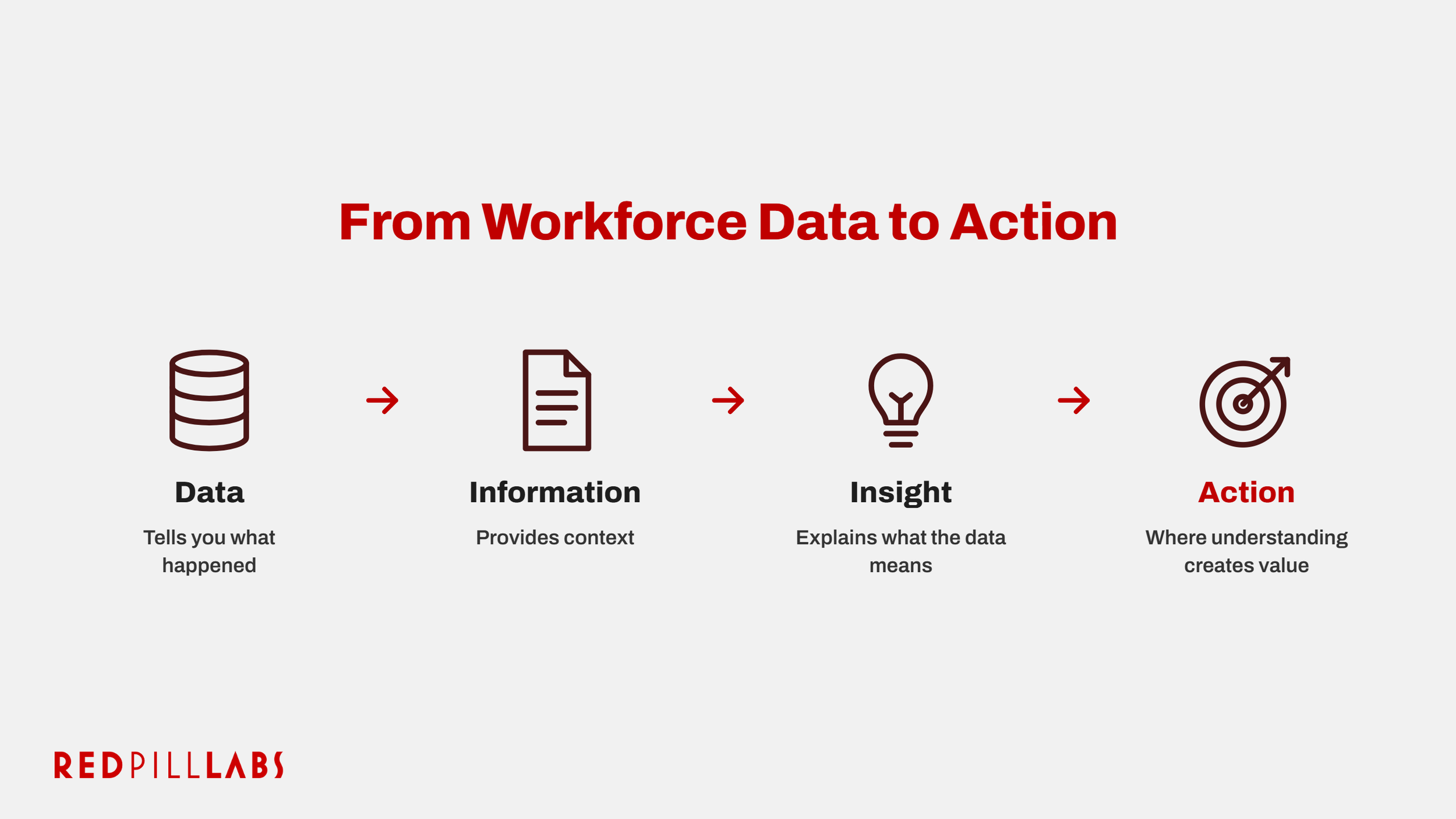
Data tells you what happened.
Information provides context.
Insight helps explain what the data means.
Action is where that understanding can create value.
For example, knowing that overtime has increased is useful.
Understanding which teams are driving the increase, whether it reflects staffing shortages or inefficient processes, and what changes could address the underlying cause is far more valuable.
Workforce insights should not sit exclusively within HR.
Decisions about staffing, skills, compensation, and productivity affect finance, operations, technology, and organizational strategy.
Connecting workforce data to these broader business priorities helps organizations move beyond reporting what has happened to making more informed decisions about what to do next.
Ultimately, the goal is not to collect more workforce data, but to make better use of the data organizations already have.
Sources
Deloitte, 2017 Global Human Capital Trends: People Analytics. https://www.deloitte.com/us/en/insights/topics/talent/human-capital-trends/2017/people-analytics-in-hr.html
Deloitte, Reclaiming Organizational Capacity (2025). https://www.deloitte.com/us/en/insights/topics/talent/human-capital-trends/2025/reclaiming-organizational-capacity.html
Deloitte, Turning Tensions Into Triumphs: Helping Leaders Transform Uncertainty Into Opportunity (2025). https://www.deloitte.com/ca/en/services/consulting/research/turning-tensions-into-triumphs-helping-leaders-transform-uncertainty-into-opportunity.html